


Television
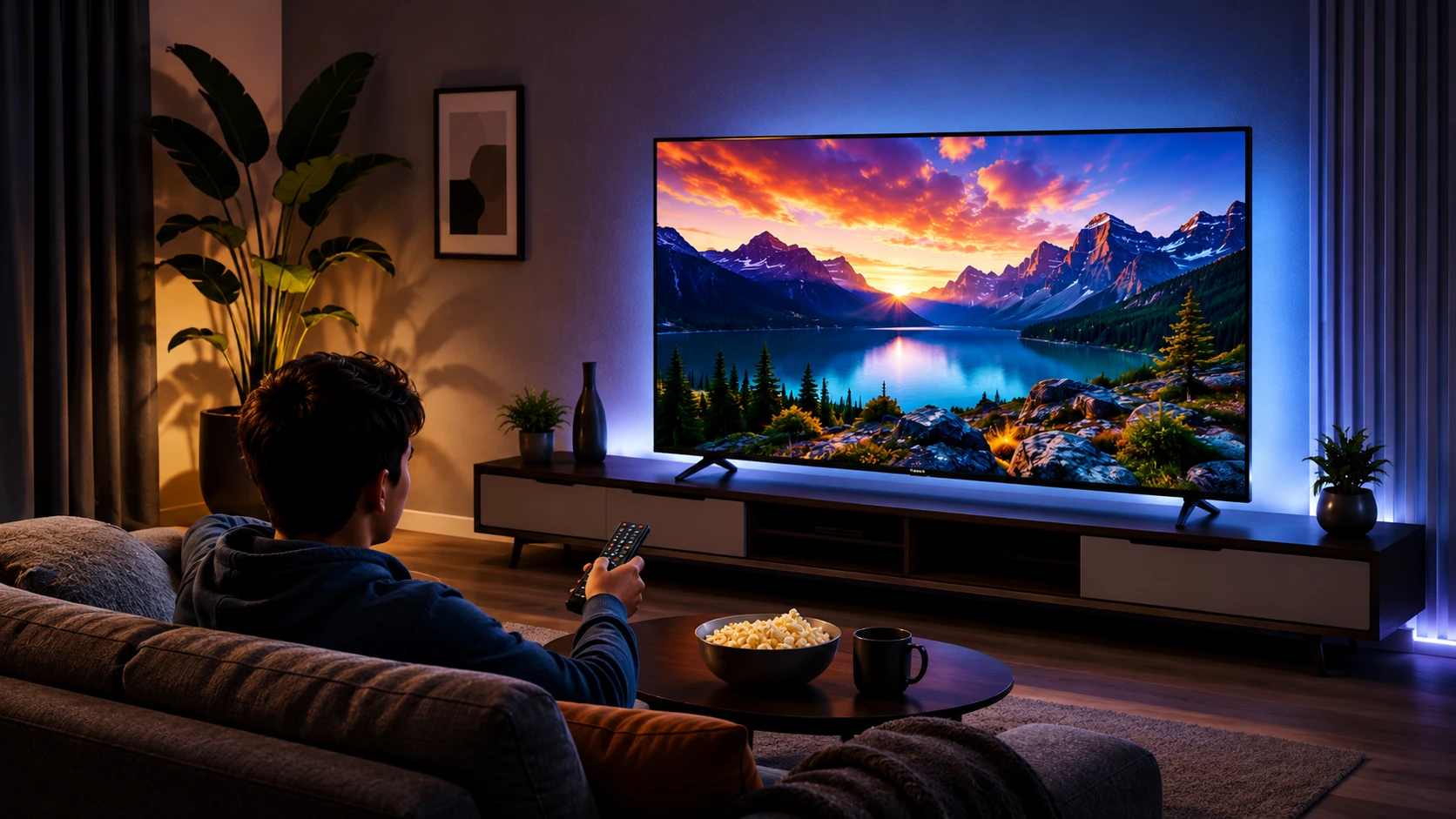
It features smart Google TV integration with voice control and seamless streaming, making it the ultimate choice for premium home entertainment.
Smart TV Trends Shaping Indian Living Rooms Right Now
Indian living rooms are changing fast. Screens are getting bigger, AI is quietly doing more of the work, prices keep dropping even as features go up, and OTT apps — not cable — now decide what a "good" TV needs to do. Yara's Smart LED TVs and 4K Google TVs are built around exactly these shifts: big, sharp, AI-assisted, and priced for an everyday Indian home.
A TV used to be judged on one thing: how good the picture looked. That's still true — but it's no longer the only thing that matters. Today's buyers are also asking how smart the TV is, how big a screen they can afford, and whether it'll keep up with five years of streaming, gaming, and whatever comes next.
Here's what's actually changing.
1. Bigger Screens Are the New Normal
A few years ago, a 32-inch screen was a perfectly normal living room TV. That's shifting fast.
As panel prices keep falling, more households are skipping straight to 43-inch and 55-inch sets — and screens above 55 inches are now one of the fastest-growing sizes in the country. The reason is simple: with most viewing now happening through OTT apps rather than cable, a bigger screen makes a real, visible difference to the experience.
What this means for you: if you're replacing an older TV, it's worth sizing up rather than buying the same size again. A 43-inch or 55-inch screen is no longer the "premium" choice — it's becoming the default one.
2. AI Is Quietly Running the TV
The biggest change in modern TVs isn't on the screen — it's behind it.
AI is now built into how a TV works, not just what it shows:
- Picture AI adjusts brightness and sharpness automatically for whatever you're watching
- Voice control lets you search or switch apps without typing
- Smart recommendations learn what your household actually watches, instead of showing the same homepage to everyone
None of this needs to be switched on manually — it runs in the background, and most people only notice it through how much less fiddling the remote needs.
3. OTT Apps Have Replaced Cable as the Main Event
Cable TV used to be the reason you bought a television. Now it's often an afterthought.
Streaming platforms — Netflix, Prime Video, YouTube, and a growing list of regional OTT apps — are the main reason most households turn the TV on. This has quietly changed what a "good" smart TV needs to do well: launch apps quickly, support Chromecast or screen mirroring from a phone, and not lag halfway through an episode.
A Smart TV today is judged less on channel count and more on how smoothly it gets you from "I want to watch something" to actually watching it.
4. Smart TVs Are Getting Cheaper, Not Just Smarter
Here's the part that surprises people: today's smart TVs are not just more capable than the ones from five years ago — they're also more affordable. Average prices have come down noticeably over the past couple of years, even as features have gone up.
Two things are driving this. First, panel costs have fallen as production has scaled. Second, a growing share of TVs sold in India are now assembled domestically, supported by government manufacturing incentives — which is part of why Indian-made brands can offer 4K and smart features at prices that would have felt unrealistic a few years ago.
5. Gaming and Sound Are Catching Up to Picture Quality
Picture quality used to be the only spec that mattered. Now buyers are paying closer attention to two things that used to be afterthoughts:
- Gaming readiness — smoother HDMI connections and lower input lag, for anyone connecting a console
- Built-in sound quality — louder, clearer audio that doesn't immediately need a separate soundbar
Neither of these shows up in a screenshot, but both show up the moment you're actually using the TV every day.
6. Rural India Is Catching Up Fast
Smart TV adoption isn't just an urban story anymore. Rural internet access has grown sharply in the last few years, and that's translating directly into rural demand for smart, streaming-ready TVs — not just basic LED sets.
For manufacturers, that means designing for value and reliability, not just for flagship features that only show up in metro showrooms.
Where Yara Fits Into These Trends
At Yara Electronics, our Smart LED TVs and 4K Google TVs are built around exactly this shift — bigger screens, AI-assisted picture and voice features, fast app access through Google TV, and pricing built for an everyday Indian household rather than a showroom display model.
As a Coimbatore-based, India-focused private-label manufacturer, Yara designs and supports its own TVs directly, with installation and after-sales handled through our own partner-technician network — so the trends above aren't just marketing language; they're what you're actually buying into.
The Living Room Keeps Moving
None of these six trends are slowing down. Screens will keep getting bigger, AI will keep doing more work quietly in the background, and the gap between "smart TV" and "regular TV" will keep shrinking until the word "smart" stops needing to be said at all.
The only real question left for most households is simple: when you next replace your TV, are you replacing it like-for-like, or upgrading into where the category is actually headed?
Frequently Asked Questions
Is a bigger TV actually worth it for a normal living room?
For most Indian living rooms, yes. As OTT streaming has become the main way households watch TV, larger screens — 43 inches and above — make a noticeably bigger difference to the viewing experience than they did with cable-only viewing.
What does "AI" actually do in a smart TV?
AI in a modern TV typically handles three things: adjusting picture quality automatically for what's playing, powering voice search and control, and improving content recommendations based on what your household actually watches.
Why have smart TV prices dropped even as features improve?
Falling panel production costs and a growing share of domestic assembly in India have both pushed prices down, even as 4K resolution, AI features, and Google TV software have become standard rather than premium add-ons.
Do I need a separate device for OTT apps if I buy a smart TV?
No. A Google TV or Android TV already has Netflix, Prime Video, YouTube, and most major OTT apps built in, along with Chromecast support for mirroring content directly from a phone.
Is gaming performance something I should care about when buying a TV?
If anyone in the household connects a gaming console, yes — smoother HDMI handling and lower input lag noticeably improve the experience, even on a TV that isn't marketed primarily as a "gaming TV."
Does Yara Electronics offer large-screen and AI-feature smart TVs?
Yes. Yara's Smart LED TV and 4K Google TV range includes larger screen sizes with AI-assisted picture features, voice control, and built-in OTT app support, backed by Yara's own partner-technician installation network.