


Interactive Flat Panels for Schools in India Yara Electronics
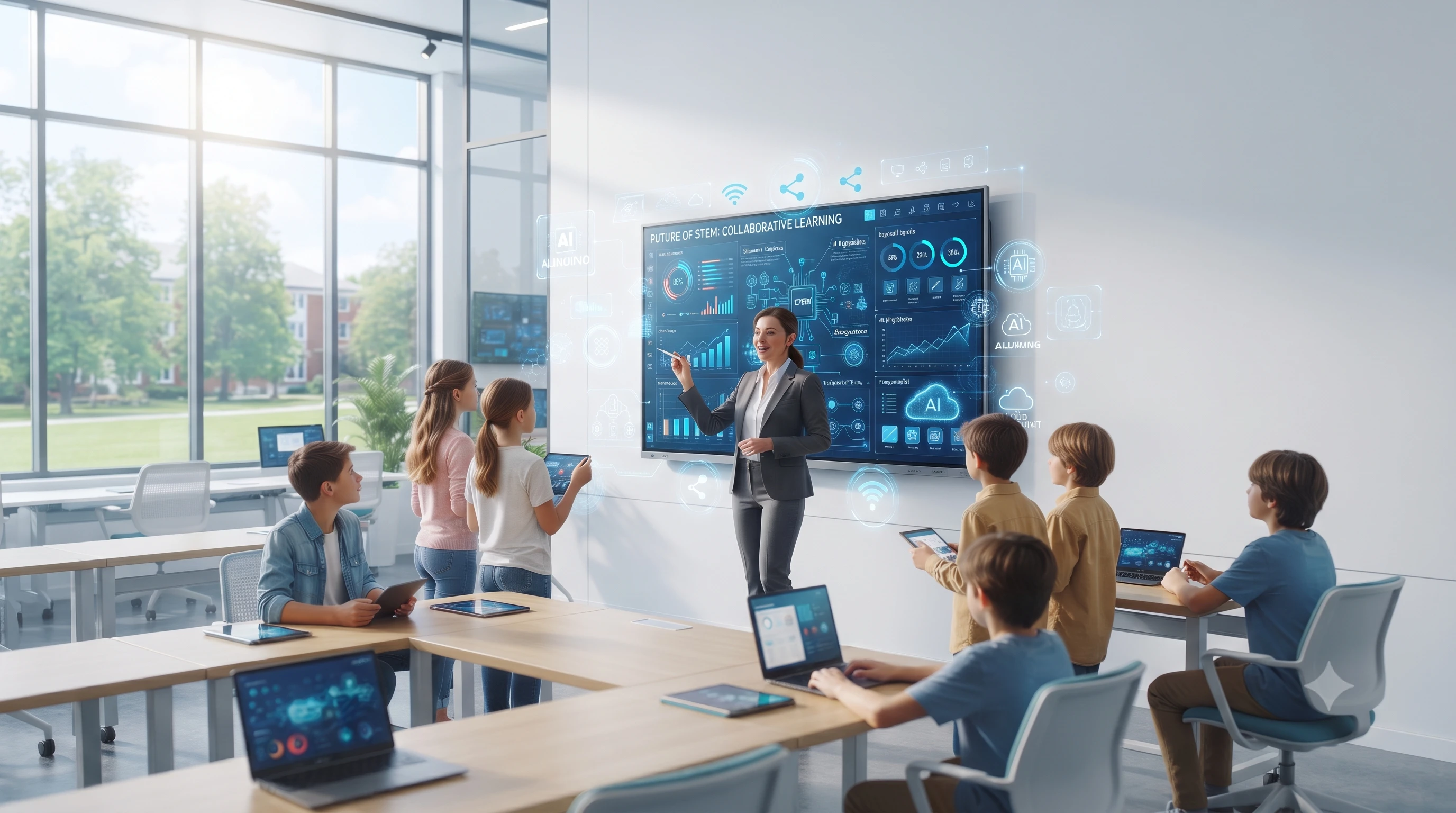
From Paper Stacks to Digital Success: How Paperless Classrooms Are Redefining Sustainable Education Interactive flat panels for paperless classrooms
Paperless Classrooms in India: How Interactive Flat Panels Drive Sustainable Education
Interactive flat panels (IFPs) are helping Indian schools eliminate printed worksheets, markers, and paper waste by moving lessons, homework, and quizzes onto a shared digital display. CBSE, ICSE, and state board schools adopting this technology report lower supply costs, better student engagement, and measurable reductions in paper consumption — all without compromising teaching quality.
What Is a Paperless Classroom?
A paperless classroom replaces physical teaching materials — printed worksheets, whiteboard markers, handout packets — with digital content delivered through an interactive flat panel display. Teachers assign and grade work digitally, students respond using personal devices, and lesson content updates instantly across every connected classroom. For Indian schools managing large student populations and multiple sections per grade, this also means consistent content delivery across every classroom on campus.
Why Indian Schools Are Going Paperless: Key Benefits
Schools across India switching to interactive flat panels consistently report the same core advantages:
- Lower recurring costs — no more restocking markers, printer ink, or paper across dozens of classrooms
- Reduced environmental impact — less paper waste, lower energy use per lesson
- Higher student engagement — interactive quizzes and device-based participation, especially useful for large class sizes
- Faster curriculum updates — content changes instantly across every classroom, helpful for schools following CBSE, ICSE, or state board syllabi that update frequently
- Stronger institutional reputation — positions the school as an innovation and sustainability leader, an increasingly important differentiator for admissions in India's competitive private school market
Real-World Example: An Indian School's Paperless Transformation
A senior school in Punjab converted 80 classrooms and conference rooms to interactive displays. Teachers began assigning homework through built-in quiz tools instead of printed worksheets. Students answered using their own devices. Lesson content updated and synced across every room in real time — removing the school's dependence on physical teaching materials almost entirely.
This is the same outcome Yara Electronics' Interactive Flat Panels (IFP) are designed to deliver for schools across India today.
How Interactive Flat Panels Reduce Energy Use
Sustainability isn't just about paper — it's also about power consumption, an important consideration given India's variable electricity costs across states. Modern interactive displays include energy-saving features such as:
- Adaptive image optimization — automatically adjusts brightness and contrast based on content type, avoiding unnecessary power draw
- Low-power standby modes — reduces energy use during idle periods, such as recess or between back-to-back classes, without interrupting lesson flow
These features let schools cut energy costs while maintaining sharp, reliable display quality for daily teaching — even in classrooms running for 7-8 hours a day.
Frequently Asked Questions
Does going paperless actually save Indian schools money? Yes. Eliminating printed worksheets, handout packets, and markers removes a recurring cost that schools otherwise pay every term. For schools with 50+ classrooms, this adds up significantly over an academic year. Digital lesson delivery through an interactive flat panel replaces those consumables entirely.
Do interactive flat panels work without student laptops? Most setups let students participate using phones, tablets, or shared devices — a dedicated laptop isn't required for basic quiz and homework participation, making this practical for Indian schools where device access varies by household.
Are interactive flat panels suitable for CBSE and state board curriculums? Yes. Digital content can be updated instantly to match CBSE, ICSE, or state board syllabus changes, without waiting for reprinted materials.
Are interactive flat panels energy-efficient for Indian classrooms? Yes. Panels with adaptive brightness control and low-power standby modes use meaningfully less energy than displays running at fixed settings all day — an important factor given rising electricity costs for schools.
How many classrooms need to convert to see cost savings? Savings scale with adoption. Schools that convert most or all classrooms — rather than just one or two — see the largest reduction in paper, ink, and printing costs across the academic year.
The Bigger Picture: A Growing Movement in Indian Education
Paperless classrooms are becoming part of a broader shift across Indian schools toward sustainable, technology-driven education. Forward-thinking institutions — from metro cities to smaller towns — now treat interactive displays as core infrastructure rather than an optional upgrade, because they deliver cost savings, environmental benefits, and better learning outcomes together.
Build a Smarter, Greener Classroom
See how Yara Electronics' interactive flat panels can help your school go paperless: Explore Yara Electronics IFP →