


2026's Washing Machine Trends: 6 Real Upgrades vs. Marketing Hype"
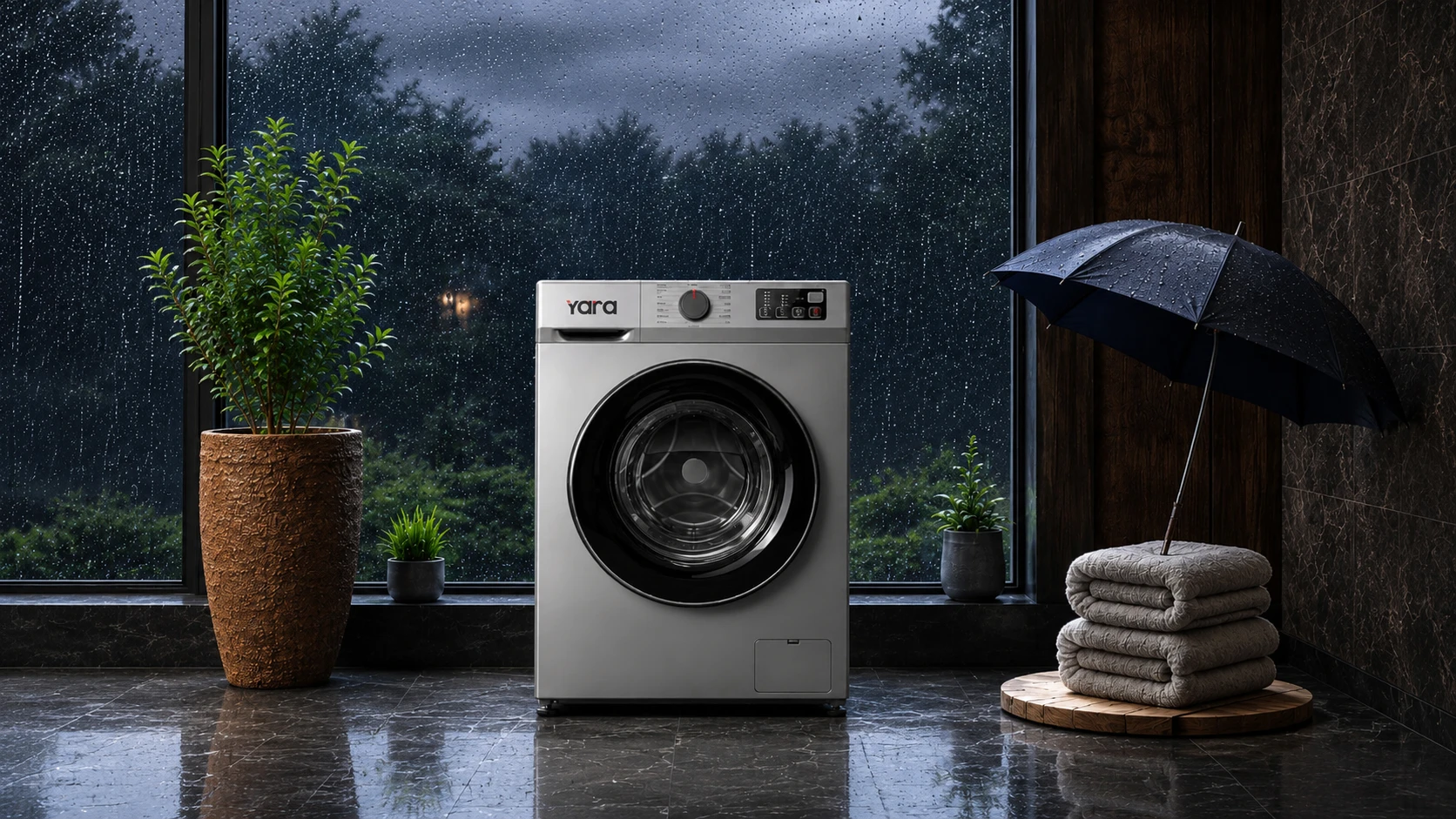
Washing Machine Trends in India 2026: What's Actually Worth Paying For
2026's Washing Machine Trends: 6 Real Upgrades vs. Marketing Hype
Indian washing machines are shifting toward inverter motors, AI-based wash sensors, hygiene-focused steam cycles, and bigger drums—while front-load machines are growing fastest, top-load and semi-automatic still win on price and power-cut reliability. Browse Yara's full range of front-load, top-load, and fully automatic washing machines →
A washing machine used to be a one-time decision: pick a capacity, pick a brand, done for the next ten years. That's no longer quite true. The machines themselves haven't changed shape much, but what's happening inside the drum has changed a lot.
Here's what's actually worth knowing before your next purchase.
1. Inverter Motors Are Becoming the Default, Not the Upgrade
A few years ago, "inverter motor" was a premium sticker on the box. Now it's closer to a baseline expectation.
An inverter motor adjusts its speed to match each load instead of running at one fixed speed — which means lower electricity bills, less noise, and a motor that simply wears out more slowly. For a household running 4-5 loads a week, that difference adds up fast.
What this means for you: if you're comparing two machines at a similar price, the one with an inverter motor will almost always cost less to run over its lifetime, even if the sticker price is slightly higher.
2. AI Wash Sensors Are Doing the Guesswork for You
The newest wave of fully automatic washing machines doesn't just run a fixed cycle — it reads the load first.
Sensors estimate fabric type and load weight, then adjust water level, detergent dosing, and wash time accordingly. In practice, this means fewer half-loads wasting water and fewer over-soaked cycles wasting time.
This used to be a flagship-only feature. It's now showing up in mid-range fully automatic machines too—which matters if you're choosing between a basic and a slightly smarter model at a similar price point.
3. Hygiene Has Become a Real Buying Factor, Not a Marketing Line
Steam-based wash cycles—designed to lift allergens and reduce bacteria without extra chemicals—have moved from a niche feature to a genuine decision point for households with young children, allergies, or simply a stronger focus on hygiene since the pandemic years.
It's a small addition mechanically, but it's increasingly the deciding factor between two machines that otherwise look identical on paper.
4. Bigger Drums Are Winning, Even in Smaller Homes
Counterintuitively, Indian households are buying bigger washing machines even as urban living spaces shrink. The reasoning is simple: fewer, larger loads beat more frequent small ones — especially for families that used to run a load every other day.
The 6-8 kg range remains the sweet spot for most Indian households, but demand above 8 kg is rising fast among larger families who'd rather wash once than wash twice.
What this means for you: when in doubt, size up rather than down. A slightly larger capacity than you "need" today tends to be the better long-term decision.
5. Front-Load Is Growing Fastest — But Top-Load Isn't Going Anywhere
Front-load machines are the fastest-growing type in India right now, mainly because they use less water, handle fabric more gently, and increasingly come packed with the inverter and AI features above.
But top-load and semi-automatic machines remain the practical choice for a huge share of Indian homes — especially where water pressure is inconsistent, power cuts are common, or budget is the deciding factor. Front-load isn't replacing top-load; it's growing alongside it.
Front load vs top load, in one line: front-load wins on efficiency and fabric care; top-load and semi-automatic win on affordability, simplicity, and tolerance for inconsistent water or power supply — which is exactly why Yara builds both.
6. More of What You're Buying Is Now Made in India
A growing share of washing machines sold in India is now assembled domestically, supported by government manufacturing incentives aimed at reducing import dependence. For buyers, that's translated into better features at the same price point as a few years ago — and shorter supply chains when something needs servicing.
Where Yara Fits Into These Trends
At Yara Electronics, our washing machine range is built directly around this shift—front-load, top-load, and fully automatic models with energy-efficient inverter motors, designed for real Indian households rather than showroom spec sheets.
Whether you're comparing a 6.5 kg machine for a smaller household or a 7.5 kg model for a larger family, the goal is the same: dependable everyday performance without paying for features you'll never use.
As a Coimbatore-based, India-focused manufacturer, Yara designs, sells, and supports its washing machines directly—installation and after-sales are handled through our own partner-technician network, not a third-party reseller chain.
See Yara's washing machines — front load, top load & fully automatic →
The Bottom Line
None of these six shifts means your old washing machine suddenly stopped working. They just mean the bar for what counts as "good enough" has moved — quieter motors, smarter cycles, better hygiene, and bigger drums are no longer luxury extras. They're what a sensible buy looks like in 2026.
Frequently Asked Questions
Is an inverter washing machine actually worth the extra cost?
In most cases, yes. An inverter motor adjusts speed to the load instead of running at a fixed speed, which lowers electricity use andnoises, and tends to extend the motor's working life — savings that add up over several years of regular use.
What washing machine capacity is right for a family of 4?
A 6.5 kg to 7.5 kg fully automatic washing machine comfortably covers most families of four, balancing everyday laundry loads without running the machine on near-empty cycles.
Is a front-load or top-load washing machine better for Indian homes?
Front-load machines use less water and are gentler on fabric, making them a strong choice for efficiency-focused households. Top-load and semi-automatic machines remain better suited to homes with inconsistent water pressure, frequent power cuts, or tighter budgets.
What is the real difference between semi-automatic and fully automatic washing machines?
A semi-automatic machine requires manual water filling and shifting clothes between wash and spin tubs, while a fully automatic machine handles the entire cycle on its own. Fully automatic machines cost more upfront but save significant time and effort.
Do AI features in a washing machine actually make a difference?
Yes, within limits. AI-based sensors that detect load weight and fabric type help avoid water and detergent wastage, which is a genuine, measurable benefit rather than just a marketing feature — though the core wash quality still depends on the motor and drum design.
Does Yara Electronics make both front-load and top-load washing machines? Yes. Yara's range includes energy-efficient front-load, top-load, and fully automatic washing machines, designed for a range of household sizes and budgets, with support through Yara's own partner-technician network.