Pixel pitch decides how sharp an LED wall looks and how much it costs. Here is how to choose it from one number: how far away your audience will stand.
When you ask for an LED video wall quote, the first question is always "which pitch?". Pixel pitch is the one number that decides how sharp the wall looks, where it works best and a large part of its price.
What is pixel pitch?
Pixel pitch is the distance, in millimetres, from the centre of one LED pixel to the next. A P2.5 wall has pixels 2.5 mm apart; a P10 wall, 10 mm apart. The smaller the number, the more pixels fit in each square metre, the sharper the picture up close, and the higher the cost.
The simple rule: distance decides pitch
Your audience's viewing distance tells you which pitch you need:
- Closest comfortable distance: about 1 metre for every 1 mm of pitch. A P2.5 wall looks seamless from about 2.5 m away.
- Best viewing distance: about 3 times that. A P2.5 wall looks its very best from around 7.5 m.
Paying for a finer pitch than your audience can see is the most common way to overspend on an LED wall. If nobody stands closer than 5 m, P4 or P5 will look just as sharp as P2.5, for a lot less.
Which pitch for which space
Fine pitch indoor: P1.25 to P1.86
For boardrooms, control rooms, TV studios, corporate lobbies and experience centres, where people stand or sit within a few metres and the wall shows text, dashboards and video calls.
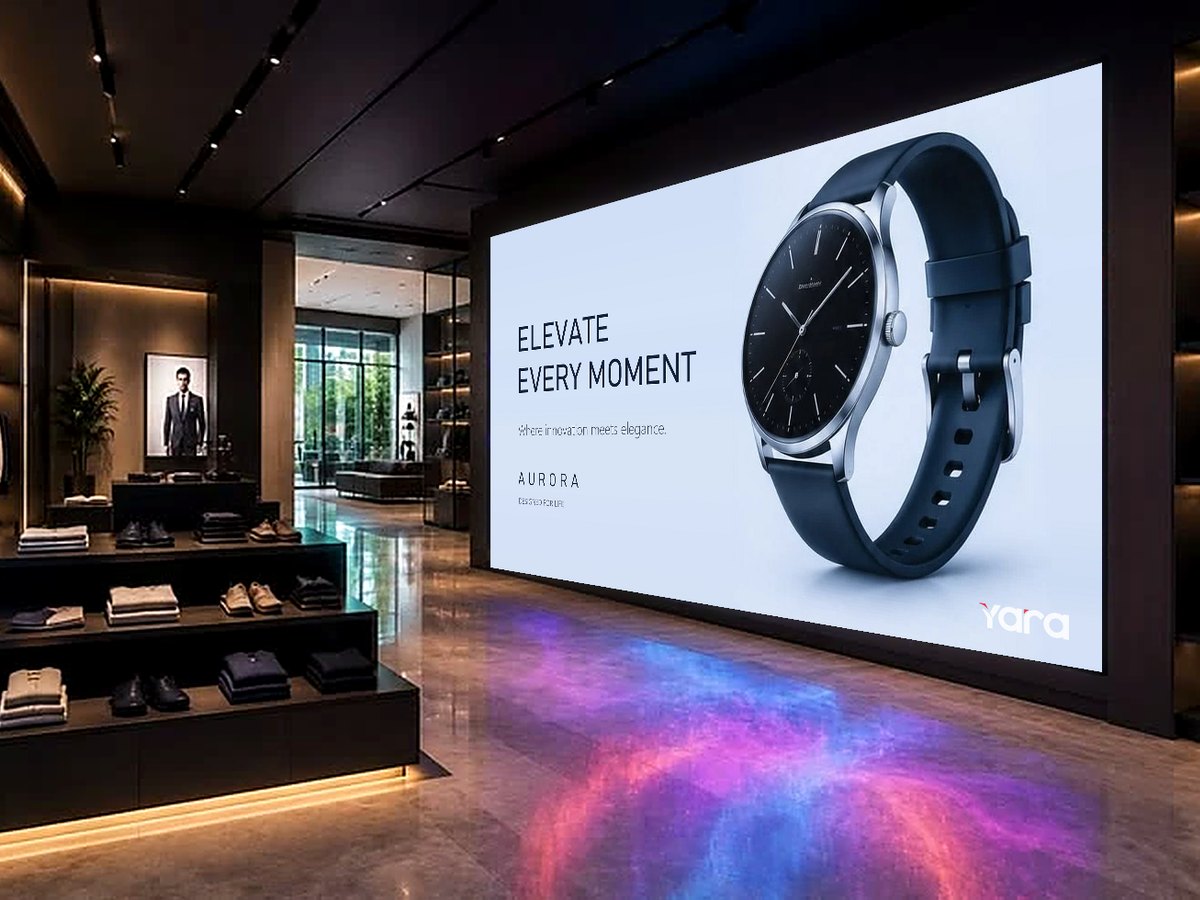
Indoor: P2.5
The all-rounder for retail stores, malls, auditoriums and places of worship: sharp at a few metres and affordable at large sizes.
Rental and stage: P2.6 indoor and P3.91 outdoor
Built in die-cast aluminium cabinets (500 × 500 mm indoor, 500 × 1000 mm IP65 outdoor) that lock together quickly, for events, weddings, conferences, concerts and open-air stages.
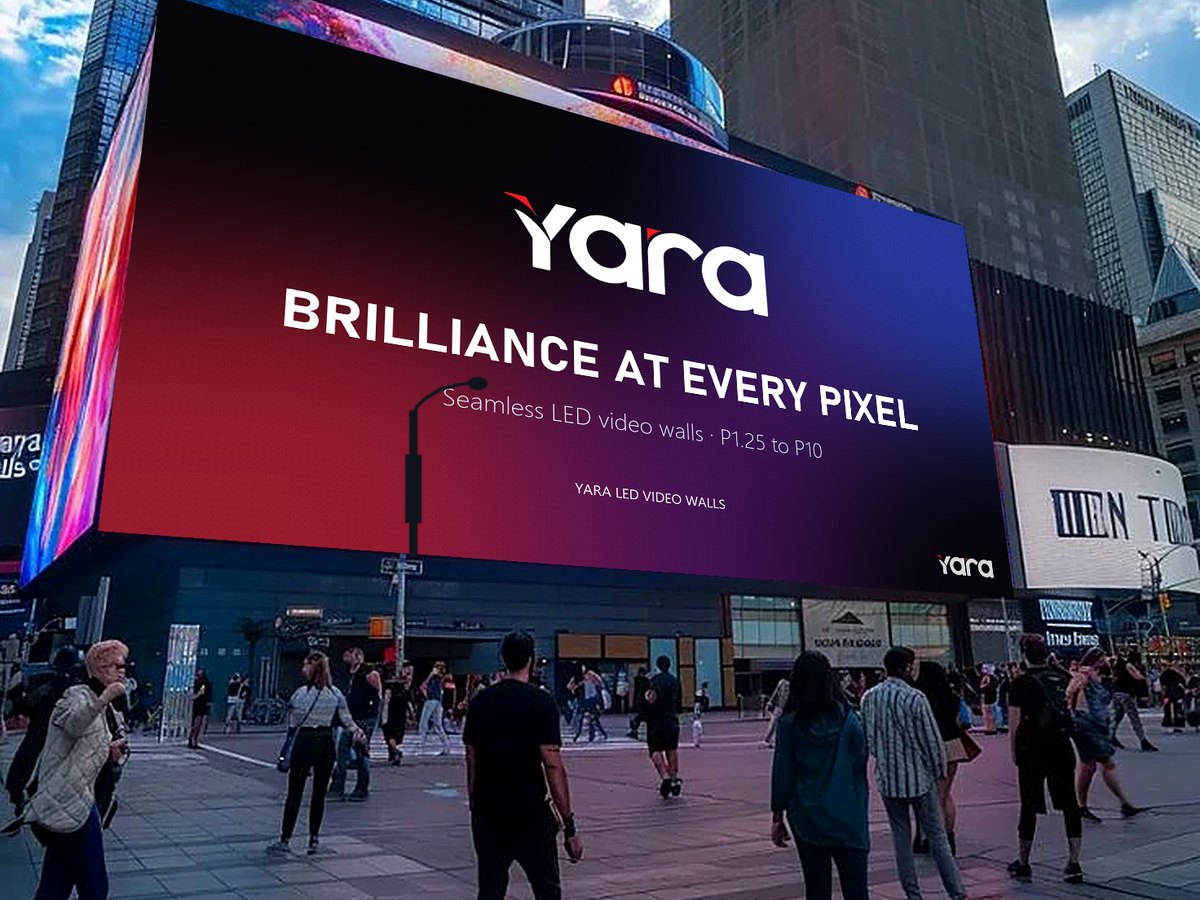
Outdoor: P4 to P10
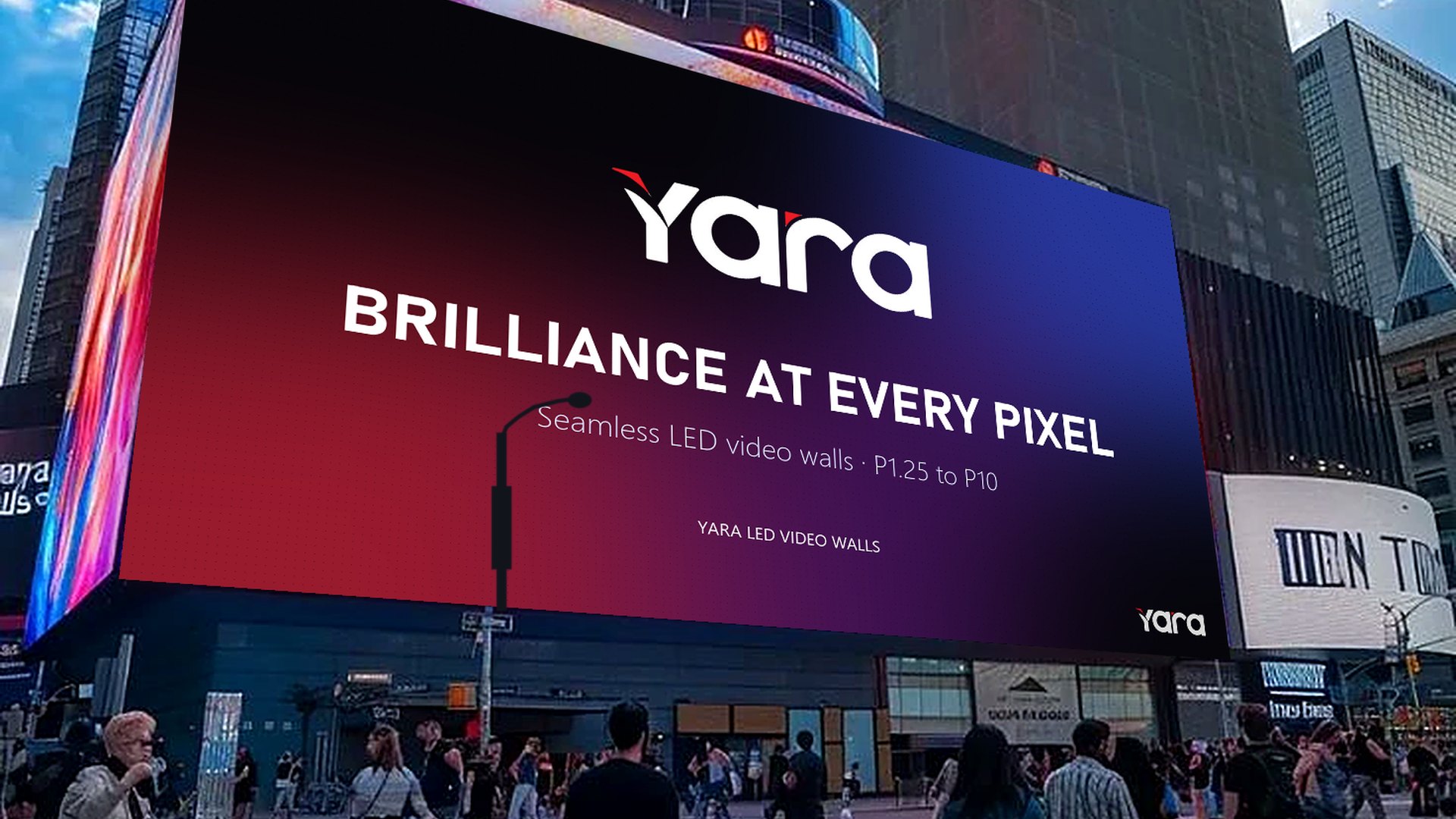
High-brightness, weatherproof walls for storefronts and building facades (P4 to P5), and roadside billboards, highway hoardings and stadium scoreboards (P8 to P10), where the audience is tens of metres away and brightness matters more than pixel density.
Other things to check
- Brightness (nits): indoor walls need far less than outdoor walls in direct sun. Yara indoor walls run at 600 to 900 nits, outdoor walls at 4,500 to 7,000 nits.
- Refresh rate: 3840 Hz and above avoids flicker on camera, important for stages and studios.
- Front or rear maintenance: front-serviceable walls can be mounted flat against a wall.
- Size and aspect ratio: LED walls are built from modules, so they can be made to almost any size.
Use the LED wall calculator to work out the size, resolution and module count for your space, or explore the Yara LED video wall range from P1.25 to P10.
Interested in our display solutions?
Book a free demo and see them in action.